Display Posts
Typical Tests
Example 1: Single Post
You Might Like This Story
 Life of Pi Production Designer at COM Tonight (2/2/2026) Posted in: BU Today Stories, Research, Stages, TestCategory - Oscar-nominated David Gropman screens film, talks shop (subtitle) Award-winning production designer David Gropman comes to the College of Communication tonight… Read On
Example 2: Multiple Posts
Recent Stories
 Alcohol Enforcement Patrol Stats 2014 (2/2/2026) Posted in: BU Today Stories - With the new semester, BU has resumed its campaign against alcohol abuse, bolstering police patrols of known party neighborhoods, citing… More Life of Pi Production Designer at COM Tonight (2/2/2026) Posted in: BU Today Stories, Research, Stages, TestCategory - Oscar-nominated David Gropman screens film, talks shop (subtitle) Award-winning production designer David Gropman comes to the College of Communication tonight… More
 For A Good Time, Try Hanging With ‘Bad Jews’ — At SpeakEasy Stage (2/2/2026) Posted in: Stages - BOSTON — As play titles go, they don’t come more loaded than “Bad Jews.” Fear not, though. “Bad Jews” is… More
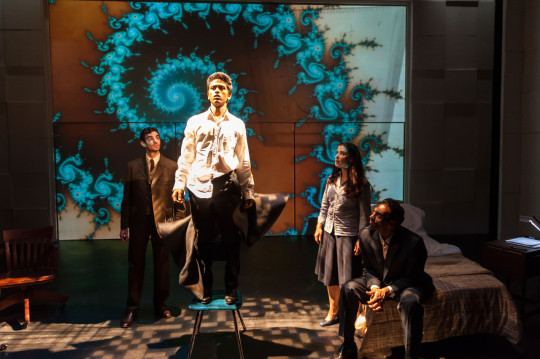
 ‘A Disappearing Number’: A Mathematical Path To The Hereafter? (2/2/2026) Posted in: Stages - You could count the prizes “A Disappearing Number” won in England in 2007: Evening Standard Award for Best Play, Laurence… More
 Puppet Showplace Theater — Productions That Aren’t Just Kids’ Stuff (2/2/2026) Posted in: Stages - For the last 40 years in Brookline, Puppet Showplace Theater has been giving puppeteers a theatrical home in New England.… More
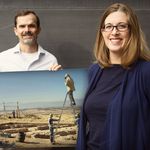 Picturing a Long-Gone Citadel (2/2/2026) Posted in: Research - In the Late Bronze Age, the walls of the citadel at Kaymakçı rose 10 feet above the jagged bedrock surrounding… More
Example 1: Single Page
You Might Like This Page
Example 2: Multiple Pages
Recent Page


Variations
Absolute DEFAULT
[display posts]
Only Specific Post(s) by ID
Number of Posts
Titling
Post Title (True by default.)
Parent Title for All Posts in Code
Recent Posts
- Sticky
- Alcohol Enforcement Patrol Stats 2014
- Life of Pi Production Designer at COM Tonight
- For A Good Time, Try Hanging With ‘Bad Jews’ — At SpeakEasy Stage
- ‘A Disappearing Number’: A Mathematical Path To The Hereafter?
- Puppet Showplace Theater — Productions That Aren’t Just Kids’ Stuff
- Picturing a Long-Gone Citadel
- News Post 2 Shows many levels of comments.
- More news widget bump
- Bump the news widget
- Form in Collapsible
Featured Image
Thumbnail
Alcohol Enforcement Patrol Stats 2014 Life of Pi Production Designer at COM Tonight For A Good Time, Try Hanging With ‘Bad Jews’ — At SpeakEasy Stage ‘A Disappearing Number’: A Mathematical Path To The Hereafter? Puppet Showplace Theater — Productions That Aren’t Just Kids’ Stuff Picturing a Long-Gone Citadel
Dates
Include Date
Specific Date Formatting
Relative Date Formatting
Date Since Last Edited
Excerpts
Default Excerpt
Custom Length (Word Count)
With “More” Text
Linked “More” Text
Categories
Enable All Categories
Specify Categories by Name
Specify Category(Categories with commas) by ID
Category Preface Text (i.e.: “Categorized as: …“)
Category Preface Text (i.e.: “Categorized as: …“)
Markup Enhancements
Apply a Class to a Post
This is a sticky post. There are a few things to verify: With the new semester, BU has resumed its campaign against alcohol abuse, bolstering police patrols of known party neighborhoods, citing students for public intoxication, dispersing loud parties—and crucially, publicizing statistics on booze-control efforts by University, Boston, and Brookline police. The graphic above shows last weekend’s enforcement statistics. See statistics from prior weekends below. Oscar-nominated David Gropman screens film, talks shop (subtitle) Award-winning production designer David Gropman comes to the College of Communication tonight to screen Life of Pi. Photo courtesy of David Gropman (Caption) When Yann Martel’s fantasy novel Life of Pi was published in 2001, many said it could never be turned into a movie. The gripping story of a teenager and a Bengal tiger struggling to survive on a raft in the middle of the ocean for 227 days was believed to be too difficult to adapt for the big screen. Even after the film got a green light in 2002, it appeared doomed after several big name directors, among them M. Night Shyamalan and Alfonso Cuarón, dropped out. Eventually Oscar-winner Ang Lee (Brokeback Mountain, Crouching Tiger, Hidden Dragon) agreed to take the project on, and decided he had to make the movie in 3-D. He called on production designer and former collaborator David Gropman to help design Martel’s fantastical world. Gropman and his team created most of the film’s vast sets on an abandoned aircraft carrier in Taiwan. One was the largest self-generating wave tank in the world, which was needed to float Pi’s lifeboat. They also painstakingly re-created the Piscine Molitor, a famous Parisian swimming pool that had been in disrepair for two decades, as well as an entire island. When the film was released in 2012, it was a huge critical and box office success, grossing $609 million worldwide and winning four Academy Awards, including Best Achievement in Directing for Ang and Best Achievement in Cinematography for Claudio Miranda. Gropman was nominated for Best Achievement in Production Design, sharing the honor with Anna Pinnock, the film’s set decorator. In a film career that began with Robert Altman’s Come Back to the Five and Dime, Jimmy Dean, Jimmy Dean in 1982, Gropman has been a production designer on more than 40 films, among them Doubt, Of Mice and Men, Hairspray, and The Cider House Rules, for which he received his first Oscar nomination. His work on Life of Pi won him the Excellence in Production Design Award from the Art Directors Guild. After a screening of Life of Pi on campus tonight, Gropman will talk about his work bringing the film to the big screen, as part of the Cinematheque series, the College of Communication program that brings accomplished filmmakers to campus to screen and discuss their work. Both are free and open to the public. BU Today spoke with Gropman recently from India, where he was on location preparing for his next film, The Hundred-Foot Journey, starring Helen Mirren. His latest film, August: Osage County, with Meryl Streep and Julia Roberts, opens Christmas Day. BU Today: How did you become a production designer? (strong) How did working in theater prepare you for a career in film? (strong) What’s your first step when you begin work on a film? (strong) The first time you read a script, it’s impossible to not start forming ideas in your head as to what this world looks like. Sometimes you’ll find that your first idea is exactly where you are at the end of the process, and other times you find a completely different road inspired by the research you’ve done and by talking with the director. You never stop designing. Are you ever able to change a director’s opinion about what a scene should look like? (strong) My job is to bring the director’s vision to the screen, so it’s very important for me to listen and to be sure that I’m completely understanding where the director is going to go. If I’m not serving his vision, then we’ll never be a complete thought. From an aesthetic or emotional point of view, there would never be any hesitation on my part once I knew what it is that a director wants. You worked with Ang Lee previously on Taking Woodstock in 2009. Is that how you came to work with him on Life of Pi? Had you ever designed a film with 3-D or computer-generated imagery before? How did you prepare for the extensive use of 3-D in Life of Pi? I found the process of designing a 3-D film exactly the same as I would for any film. Obviously, when designing an environment or set, a designer is thinking in terms of depth and movement and the components of foreground, middle ground, background. So I didn’t feel that there was much I had to do in reevaluating my process for the way I design scenery. Were you overwhelmed at any point by how much you had to create? Most of the film was shot in Taiwan. All the stage sets we built were built in Kaohsiung, Taiwan. Those included the sections of the ship, both the interior and exterior, that Pi’s family was traveling on when they hit the storm. Ang took me to scout to the southern tip of Taiwan, where there was a beautiful banyan tree. We used that tree as the basis of the island setting. What was the biggest challenge you faced in designing the film? From there, we began to play with how the raft would evolve. At that point, we enlisted the help of Steve Callahan, a sailor who was adrift at sea for 76 days. He was a huge asset and gave critical advice for the film. He helped us think about Pi’s journey, things like how the currents would affect that journey, the weather conditions, making sure that the waves we created were appropriate. And he helped us figure out how Pi might have taken the elements and the supplies he had in the lifeboat and adapted them for other uses. What is the best part of being a production designer? What advice would you give to students interested in production design? I’m aware that a lot of what I’m doing as a designer is trying to create a kind of iconography for the film, a sort of vision or quality that makes the audience believe from the beginning to the end that the film is all one complete world, one environment. The audience shouldn’t be seeing the sets; they should be seeing the emotion that those sets are meant to evoke. You want to try to make the production and the sets take a backseat to the story itself. You don’t want it to take center stage. And that’s what makes a successful design and a successful designer. If the first thing the audience sees or responds to is your design, then you’re not doing a good job. You’re there to enhance the story and performances and do it in a way that is absolutely correct and beautiful, but that shouldn’t be the first thing the audience notices. Life of Pi screens tonight, Friday, December 6, at 7 p.m., followed by a talk by David Gropman, at the College of Communication, Room 101, 640 Commonwealth Ave. The event, part of the BU Cinematheque series, is free and open to the public. BOSTON — As play titles go, they don’t come more loaded than “Bad Jews.” Fear not, though. “Bad Jews” is not an attack on anyone; it’s more a Rorschach test that calls out not to anti-Semites but to members of the Jewish community themselves. To me, for example, a bad Jew is someone outside of the Klinghoffer family who tried to shut down John Adams’ “The Death of Klinghoffer” at the Metropolitan Opera this week, as such censoring of the arts is totally out of keeping with the tradition of open dialogue and artistic freedom. To them, that makes me a self-hater, ready to apologize for Palestinian terrorists, hence a bad Jew. This is more or less the terrain of Joshua Harmon’s excellent one-act play, “Bad Jews,” in a charged SpeakEasy Stage Company production at the Boston Center for the Arts (through Nov. 29). Harmon gives Jews a chance to think about these questions and even laugh — uproariously at times — about how they’re asked. (But not answered. Harmon doesn’t pretend to have the answer.) Not that the play is only an internal dialogue any more than James Joyce’s “The Dead,” Amy Tan’s “The Joy Luck Club” or Chimamanda Ngozi Adichie’s “Americanah” are. The question of assimilation vs. ethnocentrism is a universal one, and one that each individual has to answer for him or herself. The problem is that many people try to answer it for everyone else. Which often leads to fierce arguments within the community — and, in this case, great hilarity onstage. There is also the matter of the Holocaust in this case. Is the “never again” legacy a rallying call for Jews, as one of the characters in the play would have it? Or a cry that no one anywhere should have to endure ethnic cleansing, or even hatred, again? Alan Wolfe calls it the particularists, who lean right, vs. the universalists, who lean left, in his new book, “At Home in Exile.” Liam gives as good as he gets. His monologue about Daphna’s self-righteousness is one of the great moments in Boston theater this spring. “Her little Talmudic personality grows in two seconds like those sponges you put in water and she becomes this little uber-Jew, lording her fanaticism over everyone.” You could justifiably say that none of the characters are likable, but you also have to say what a supremely likable production this is. Rebecca Bradshaw is an up and coming director who keeps the pace just right — neither too manic nor too static. The four actors so inhabit their characters that I bet most audience members couldn’t identify the one Jewish actor without looking at their names in the program, or in the next paragraph. Victor Shopov is one of the most intense actors around and he uses that unrelenting stare to comedic as well as dramatic effect as Liam while Alison McCartan comes out of the blocks like Julia Louis-Dreyfus on a Grande Starbucks. It’s to her credit that Daphna is more than a stereotype; you can never quite write her off because McCartan invests so much charisma, and believability, into the performance. McCartan even makes Daphna’s meanness fun, as when she goads Melody into singing “Summertime.” Melody (Gillian Mariner Gordon) sings “Summertime” to the amusement of the rest of the characters. (Craig Bailey/Perspective Photo) But then Harmon gives her and the others so much to work with, even if I don’t buy an ultra-Zionist going around quoting Howard Zinn’s “People’s History of the United States.” (He certainly didn’t go around quoting them, at least positively). But Harmon has a wicked sense of humor and the Zinn reference is used to great effect as Daphna gives Melody the lowdown on the genocidal nature of how her European forefathers settled the United States. Every time the play starts to get a little prolix, Harmon snaps out of it. He has obviously lived these arguments and even if the characters aren’t drawn on his family, he knows his stuff. I’m not sure he adds anything to the never-ending dialogue except a needed jolt of humor, but it’s still a smart dissection of assimilation and its discontents. Part of the great appeal of plays like “Bad Jews” is that the theater has become one of the few places (along with pay cable) where nuanced dialogue about ethnicity can occur, away from the culture wars. Much of that dialogue has taken place at SpeakEasy Stage Company, with plays and musicals like “Far from Heaven” and “Clybourne Park.” Harmon’s “Bad Jews” is in very good company. You could count the prizes “A Disappearing Number” won in England in 2007: Evening Standard Award for Best Play, Laurence Olivier Award for Best New Play, Critics’ Circle Theatre award for Best New Play. Or you could just sit back and let the arithmetic wash over you (and the rest of Central Square Theater) as Underground Railway Theater unfurls its quite credible staging of this numerical fantasia created by British polymath Simon McBurney and his troupe, Complicité. One of URT’s Catalyst Collaborative@MIT projects marrying stage to science, “A Disappearing Number” intersperses the early 20th-century collaboration of Oxford don G.H. Hardy and Indian math prodigy Srinivasa Ramanujan with a fictional, contemporary love story involving a British math professor and an Indian American hedge-fund manager dealing (literally and symbolically) in futures. Perhaps appropriately, the threads are tied together by a self-described string theorist who only steps out of the lecture hall at the end, when he and the hedge-fund manager meet on a plane and then on a riverbank in India. This perky professor does, however, inform us at the outset that, while the theater surrounding it is artifice, the math onstage is real. As a play, “A Disappearing Number” bears all the earmarks of a work created by committee: it’s cobbled together, marred by random snatches of this and that, and is far from exquisitely written. The beauty, as it were, is in the numbers, which in Elaine Vaan Hogue’s fluid staging hurtle toward us among various expanding and dividing patterns, their pulsing echoed in the Indian music and dance woven throughout the theater piece. Paul Melendy, Jacob Athyal, Christine Hamel and Amar Srivastava in “A Disappearing Number.” (A.R. Sinclair Photography) “A mathematician, like a painter or a poet, is a maker of patterns,” Hardy wrote in “A Mathematician’s Apology,” adding that “beauty is the first test: there is no permanent place in the world for ugly mathematics.” “A Disappearing Number” sets out to demonstrate that not only is math gorgeous but that, stretched toward Infinity, it may also be our closest path to the hereafter. I’ll admit that I don’t know a Mandelbrot fractal from a Manischewitz wine. But that didn’t stop me from admiring the “pure mathematics” that exercise such a hold on Hardy, Ramanujan and the play’s Ruth Minnen, a Brunel University professor whose lecture on infinite series (culled from an equation of Ramanujan’s) kicks off Complicité’s fragmented meditation. Among her listeners is brash businessman Al Cooper, who has wandered into Ruth’s lecture from an adjacent conference and hits on her at the end of the talk. He is interested in Infinity, he says, “because that’s where I’m going to go when I die.” His more immediate concern, however, is another numerical series: the digits that comprise Ruth’s phone number. Al and Ruth’s story is, of course, made up — and Ruth, like Ramanujan, dies young. (This is no spoiler as we watch both deaths unfold repeatedly and largely wordlessly even before they happen.) This leaves Al to contemplate the continuum of space and time, represented by the addition of ever-diminishing numbers, that he hopes will lead him to some posthumous form of Ruth (whose not-insignificant phone number he spends a large part of the play trying to get transferred, via an outsourced, disembodied representative of British Telephone, to his own mobile device). The true story of Hardy and Ramanujan’s collaboration – which the former called “the one romantic incident in my life” — is both more abstract and, in the theater piece, more remote. Ramanujan, an unschooled mathematical savant working as a clerk in Madras, was also something of a mystic. “An equation for me,” he opined, “has no meaning unless it expresses a thought of God.” He is easily the play’s most fascinating figure, but many of his scenes are played in silhouette, behind a screen, in one of the upstage blocks that comprise the set (and serve as screens for the ongoing parade of projections). He only comes center stage, briefly, during his ill-fated tenure in Cambridge with Hardy. (A strict vegetarian and workaholic, he contracted tuberculosis and died soon after returning to India.) Paul Melendy’s crisp, obsessive Hardy, too, is often confined to an upstage cubicle. So the production sometimes seems a hypnotic swirl without a center. But what a brainy kaleidoscope it is, with God, as Ramanujan might remark, in the details – some of them, including Ruth’s passport, birth-control pills and dog-eared copy of “A Mathematician’s Apology,” almost fetishistically treated. And when a cosmic barrage of numbers or equations isn’t rushing at us, other projections are: vividly hued temples and the bustle of India, rain exploding like fireworks, scenery speeding by the windows of a train. Christine Hamel in “A Disappearing Number.” (A.R. Sinclair Photography) The Indian rhythms, in both the tabla doodlings of musicians Ryan Meyer and Brian Fairley and the dance interludes choreographed by Aparna Sindhoor, lend both precision and East-West atmosphere. There are lively performances, too, especially by Christine Hamel as Ruth, caught between Ramanujan’s spell and Al’s less aesthetic and ascetic orbit, and Amar Srivastava as the ever closing, ever questing Al. “A Disappearing Number” may not be a thoroughly satisfying drama, but it adds up to a heady intellectual and emotional spectacle. For the last 40 years in Brookline, Puppet Showplace Theater has been giving puppeteers a theatrical home in New England. Started by Mary Churchill in 1974 as a home for her own puppetry company, the organization presents performances by a new artist nearly every week, with over 300 shows per year. While puppets have often been used to teach lessons in the schools, puppeteers come from far and wide to present their works in the 95-seat storefront theater. But many of these performances aren’t the didactic, pedagogical puppetry you might remember from grade school. Today’s puppeteers are using a variety of styles and mediums to tell diverse stories that are both entertaining and thought provoking. This November, their “American Journeys” series features four professional puppetry productions for families, using a wide variety of handheld characters to share unique American Stories. Beginning Nov. 20, “The Yankee Peddler: Stories and Songs from Old New England,” by resident puppetry artist Brad Shur, will bring 300 years of New England history and folklore to life using intricate shadow puppets, with live folk music provided by Chris Monti. In this atypical pilgrim story, audiences help the residents of Cheshire, Massachusetts, make the world’s largest wheel of cheese, sail the ocean with the legendary giant sailor Alfred Bulltop Stormalong, and meet a very fashionable bear by the name of Jenny Jenkins. However, Puppet Showplace proves that puppets aren’t just kids’ play. Check out their “Puppets At Night” series for adults, featuring Of Bread and Paper on Nov. 14 and 15. A mysterious storyteller in a coat of paper strings together a tale of a refugee lost in a land made entirely of paper, with nothing but a round of bread to help him find his way home. Finn Campman, award-winning puppeteer from Vermont’s Company of Strangers, paints this story using exquisite paper figures, light and shadow, in his one-man show. “Puppets at Night” also features “Puppet Showplace Slam” Jan. 17, March 21, and May 16. The puppet slam event was created at The Puppet Showplace, and has been used by other puppet theaters across the country. A curated night of short form puppetry, these evenings often feature visiting artists, established performers, and newer performers on the same bill in mini-plays for adults. In January, look for the company to showcase works from their developing artists in their “New Year, New Shows” series. When artistic director Roxie Myhrum took over as artistic director in 2010, she noted that soon they would experience a “supply problem” with most puppetry development grants being geared toward more adult and edgy works. She created a development program for puppetry works for youth and family audiences. Each year, three companies are given support to build a new work right there in Allston through their Incubator program. Past recipients have developed shows that have gone on from their Boston premiere to tour internationally and receive wide acclaim. This year, West Springfield’s CactusHead Puppets is developing a slightly silly version of the “Pied Piper of Hamelin” and Jamaica Plain’s Bonnie Duncan is developing a dialogue-less show, “Lollipops for Breakfast,” an imaginative ode to the boundless creativity of kids. Robin Allen LaPlante is a local arts administrator who is skilled in the mystical arts of social media, musical theater and arts marketing. When not working as a marketing & communications manager at From the Top, she fills her time baking delicious goodies, camping with her family, or playing with the crazy theater-makers at New Exhibition Room. In the Late Bronze Age, the walls of the citadel at Kaymakçı rose 10 feet above the jagged bedrock surrounding it. Behind the fortification was a community of homes, workshops, roads, plazas, and great halls. The neighboring residences and cemeteries surrounding the citadel sprawled across 60 acres—larger than the site of Troy, the ancient city celebrated in The Iliad. And then they were gone. Chris Roosevelt, a College of Arts & Sciences associate professor of archaeology, and Christina Luke, a senior lecturer in the archaeology department and the CAS Writing Program, are leading a team of archaeologists who are trying to learn what life was like at Kaymakçı, and why the largest known Middle to Late Bronze Age (2000 to 1200 BC) site in western Anatolia (current-day Turkey) was abandoned. The archaeologists are studying items ranging from pottery to seeds to the teeth of animals that lived in the area, and they hope to reconstruct the site with help from computer-enhanced photographs. Roosevelt and Luke have spent the past 10 summers exploring the second millennium BC site and its greater environs in the Marmara Lake basin. Working on foot and with drones, their team has found six fortified citadels, the largest of which, Kaymakçı, was the focus of this summer’s excavation. “We believe Kaymakçı was the political powerhouse in the area,” Luke says. “The site was a very big, bustling city, and then it collapsed. No one knows why, but there were periods of large-scale fire. And then no one went back there to live. From an archaeological perspective, that’s fantastic, because otherwise we would have to weed through the layers of everyone who lived on top of the site afterward. We have in Kaymakçı what is called a pristine site.” While they have yet to find proof of a written language at Kaymakçı, Roosevelt and Luke believe it was the capital city of a vassal kingdom mentioned in ancient Anatolian Hittite texts, whose archives describe a royal marriage with a king from the “Seha River Land,” the kingdom those at Kaymakçı probably ruled over. Luke says other written records suggest that the politically astute kings living at Kaymakçı would shift alliances frequently, not unlike the kings and chieftains in Game of Thrones. The Kaymakçı Archaeological Project is, in fact, just one part of the duo’s larger Gygaia Projects, a multifaceted initiative to preserve the ancestral cultures and natural environments of western Turkey’s Marmara Lake basin. Their work is partially funded by the National Science Foundation and the National Endowment for the Humanities. Gygaia Projects strives to educate local residents and to explore the geopolitical, economic, ritual, and social intricacies of the site, such as how the residents of Kaymakçı got along with the neighboring Hittite and Mycenaean people. The BU-based team worked this past summer with more than 60 archaeologists from universities in the United States, the Czech Republic, and Turkey. Some collected oral histories from the locals, while others made plans for an education center that will one day teach visitors about the site. Team members took turns writing about the dig on the Gygaia Projects blog when they weren’t out in the field. This summer’s work in Kaymakçı yielded 55,000 fragments of pottery, as well as a bronze knife, loom weights, broaches, tools, animal bones, and marble idols. The archaeologists say uncommon objects such as the knife and the tools suggest that the site was home to a prosperous people. All of the artifacts were digitally recorded and scanned into a database, the 21st-century archaeologist’s most important tool. asdf
.sticky class if you are using the post_class() function to generate your post classes, which is a best practice.



Gropman: I started in theater and studied stage design, first at San Francisco State University and then at Yale University School of Drama. From there, I went to New York and started a career in designing theater on Broadway and off-Broadway, as well as some dance and opera. In 1980 I did a stage play with the film director Robert Altman called Come Back to the Five and Dime, Jimmy Dean, Jimmy Dean, which had a brief run on Broadway and then was made into a film. After that, I became a film person, and that’s been my career ever since. I’ve been working with a lot of directors who also come from theater, so those experiences and relationships from many years in theater paid off.
A lot of people ask me what the difference is between film and theater. As a designer, I find it’s very much the same process. You start with a piece, and you have an emotional response to it. You have an analytical response in terms of making sure that you are fulfilling the needs of the literature, and you create the world for the story to unfold in. So for me, it’s exactly the same process; it’s just that in film, you usually work on a larger scale, a larger canvas.
It’s different on each project. First I read the screenplay and then I start my research at the New York Public Library Picture Collection, which I’ve been using since I began as a designer. I start pulling images that I find inspirational in terms of material, and I put together a little package that I give to the director and see how he responds, and then I start designing.
That’s a good question. There’s no question that there are times that you present something to a director and they might disagree with you. But you might need to convince them that the research you’ve done is correct, and there are historical or factual reasons for your suggesting these things.
Ang told me that one of the reasons he wanted to work with me on Life of Pi was the fact that I had been a theater designer first. He had a notion in his head that his first 3-D film, in a way, should look very much like theater, that the audience is not only “listening” to your image, but when the curtain goes up, that image is in three dimensions. He loved the idea of working with a designer who knew theater.
I’ve certainly done films where we’ve used 3-D visual effects.
Well, it was very important to Ang that as a director of a 3-D film he completely understood the mechanics of 3-D. We went to a lot of 3-D films together, and I took a one-day master class on 3-D film work.
No. One of the amazing things about Yann Martel’s book is how he convinces you that the facts and information that he’s using, that these worlds and moments, are actually real. The island is probably the biggest stretch in terms of storytelling, and it’s at that point in the novel where you say, ‘Wait, I’ve bought everything you’ve told me up till now, but should I believe this?’ So for me, it was trying to find a way to express that this world was not only amazing, but also had a reality to it.
Probably the greatest challenge was the lifeboat, because so much of the film takes place there. Being historically correct was important, even when choosing the lifeboat’s orange interior and white exterior. I worked with Ang’s oldest son, Han, who is a wonderful artist, early on in New York. He started doing some early illustrations, and then we sent him off to start thinking about what a boy like Pi would do when faced with the elements that are in this lifeboat. So Han started playing around and came up with that initial design for the raft that Pi ends up on, which is a triangle created by the ship’s boards, with a life buoy in the center. It was a really beautiful graphical triangle, which was both practical and had a very, very spiritual feeling.
My favorite part is when I first get a script and start to research and put together images. Usually that goes hand in hand with scouting locations and immersing myself in new and different worlds and finding the place, both the physical place and inspirational place, that defines the film.
This is going to sound like a dad talking, but it’s very important to have the ability to draw so that you can represent your ideas to others. Start with a basic understanding of drafting, painting, architecture, and history. You don’t have to be an engineer, but you have to have a sense of what can work and what can’t work physically. And then you just need that piece of you that sees things in those terms, sees things as a designer, and that’s something I think you don’t learn. That’s something that is just in you.


Carolyn Clay was for many years the theater editor and chief drama critic for the Boston Phoenix. She is a past winner of the George Jean Nathan Award for Dramatic Criticism.A Stone-Lined Pit
 Fusce massa turpis, consequat et vulputate vitae, semper consequat orci. Pellentesque dignissim massa a neque sollicitudin non dignissim nulla tempor. Suspendisse potenti. Pellentesque ut magna elit. Mauris urna sapien, faucibus quis consectetur eu, ornare sed mauris. Nullam sagittis blandit luctus. Morbi fermentum quam sed mauris posuere sit amet ultrices tortor accumsan. Maecenas blandit ante sit amet mi accumsan egestas. Pellentesque orci est, auctor vel congue sed, eleifend vel justo. Sed placerat eros at ante convallis eleifend. Quisque dignissim, orci accumsan placerat volutpat, justo turpis convallis tellus, quis rutrum ligula odio in dui. Sed tristique sagittis orci eu pharetra.
 Click me to see a collapsible form
Define the Element to Display a Post (Default is “ul”. Either “ul”, “ol”, or “div”)
Revise a Post’s Class Name (Default is “display-posts-listing”)
Revise the Parent Wrapping element’s ID (Can Apply to Categories, Too)